


What to Watch For — and How to Plan Proactively
Vintage homes offer exceptional craftsmanship, architectural detail, and endless charm. However, many still contain outdated mechanical systems that can affect safety, functionality, and insurability. Electrical issues are near the top of the list for health/safety concerns on an older home – and with good reason! Understanding common concerns allows vintage homeowners and homebuyers to plan proactively and avoid costly surprises.
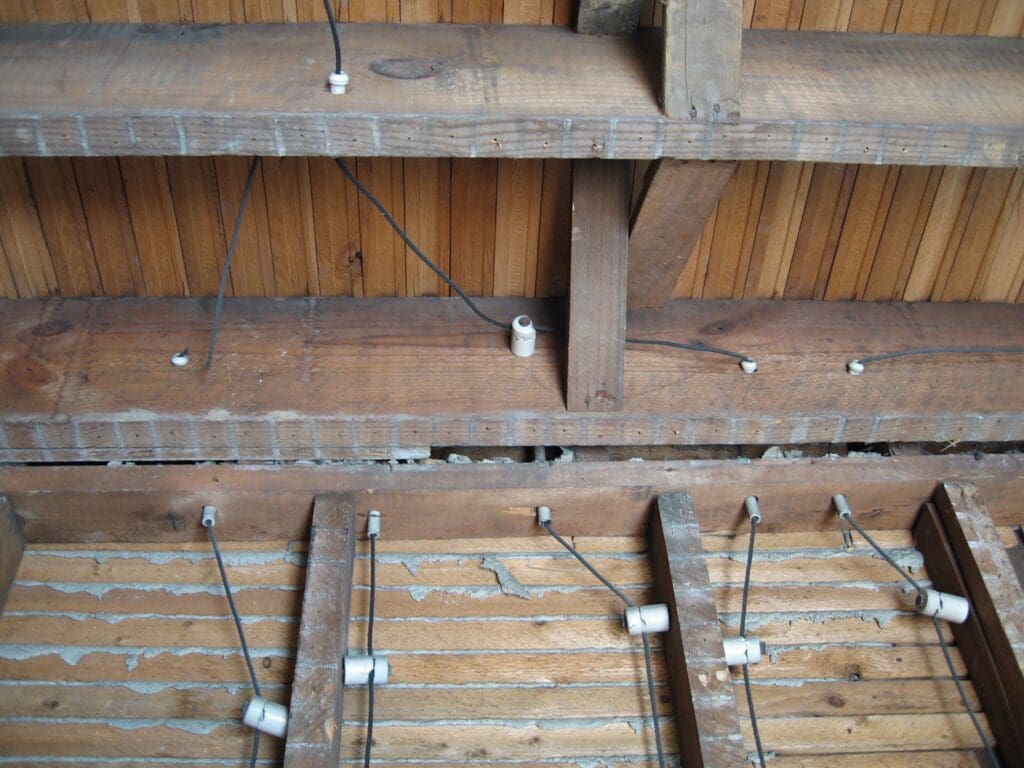
Knob-and-Tube Wiring
Common in homes built before the 1940s, knob-and-tube wiring uses ceramic knobs and clothinsulated conductors.
Primary concerns:
- No grounding conductor
- Aging, brittle insulation
- Not designed for modern electrical loads
- Insurance limitations or higher premiums
Active systems should be evaluated by a licensed electrician, especially if found on a home inspection, before renovations, and before or insulation upgrades or changes.
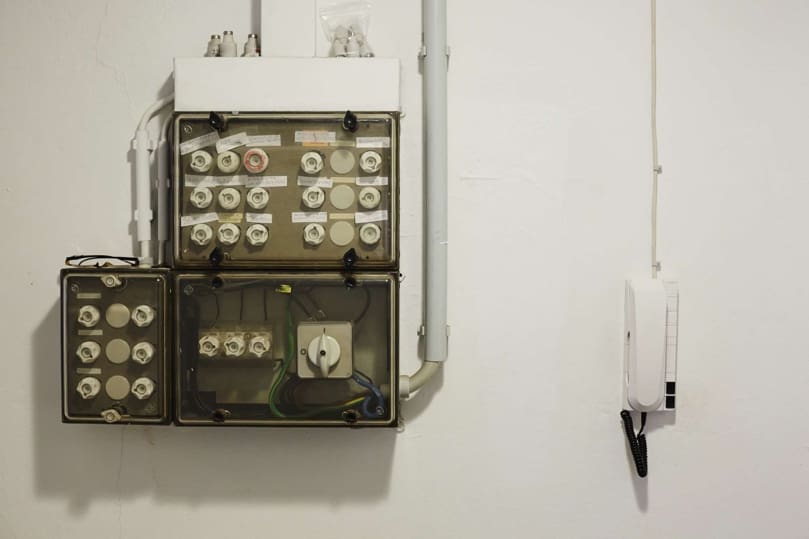
Fuse Boxes Instead of Circuit Breakers
Homes built before the 1960s often have fuse boxes rather than modern breaker panels.
Common issues:
- Often limited to 60-amp service
- Oversized fuses increase fire risk
- Frequently flagged during insurance underwriting and may require replacement before a policy is issued
Upgrading to a 100- or 200-amp breaker panel improves safety, capacity, and insurability.
Inadequate Electrical Service
Older homes may not have sufficient service capacity for modern usage.
Common indicators:
- Frequent blown fuses or tripped breakers
- Flickering lights when appliances operate
- Heavy reliance on extension cords
- Limited circuit distribution
If you own or plan to purchase an electric vehicle, most Level 2 chargers require a dedicated 240-volt circuit and adequate panel capacity. Many vintage homes require service upgrades before EV installation.
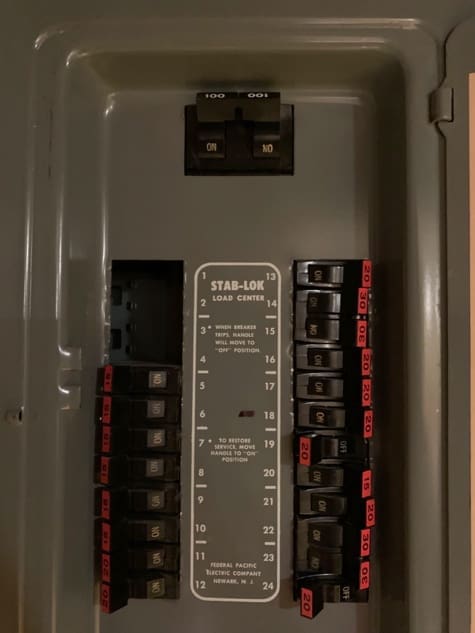
Certain Types of Electrical Panels
Certain mid-century breaker panels — especially Federal Pacific (FPE) Stab-Lok and Zinsco — have well-documented safety concerns.
These panels may fail to trip during overload conditions, increasing fire risk. Many insurance carriers require replacement once identified.
Aluminum Wiring
Aluminum branch wiring was commonly installed in homes built between the mid-1960s and mid-1970s as a lower-cost alternative to copper.
While not inherently unsafe, aluminum wiring expands and contracts more than copper, which can lead to loose connections over time. Loose connections increase the risk of overheating and, in some cases, fire.
Common concerns include:
- Increased oxidation at connection points
- Higher likelihood of overheating at outlets and switches
- Insurance underwriting questions or required documentation
Aluminum wiring is often identified by markings on the cable sheathing or wiring at the panel. A licensed electrician can evaluate whether remediation is needed.
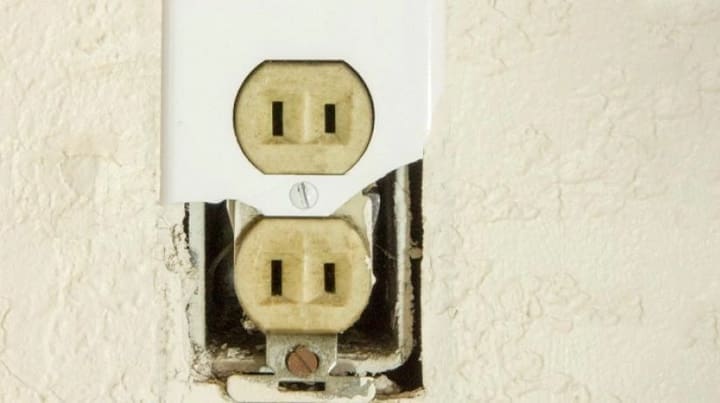
Ungrounded Outlets
Two-prong outlets indicate a lack of grounding.
Risks include:
- Increased potential for electrical shock
- Limited compatibility with modern electronics
- Improper retrofitting with three-prong outlets
A licensed electrician can determine whether grounding upgrades or GFCI protection are appropriate.
A Quick Note
I am not an electrician, and if you have specific questions about your home or electrical issues, you should always consult a licensed electrician.
The concerns outlined here are based on what I regularly see flagged during inspections, insurance underwriting, and while helping clients obtain homeowner’s insurance.
If you need the name of some great electricians, don’t hesitate to reach out.


